Introduction to the Flag of Morocco
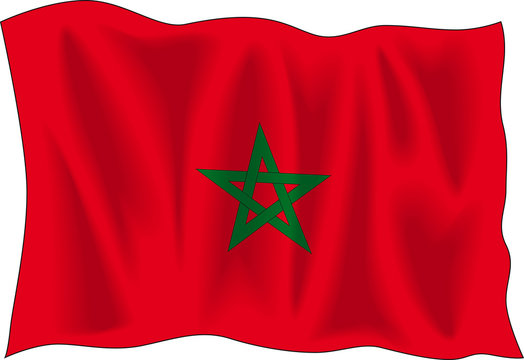
The Moroccan flag displays a red field with a green pentagram at its center. The red background represents courage, strength, and bravery, while the green pentagram symbolizes the five pillars of Islam and reflects the country’s Islamic faith. The colors red and green also express Morocco’s deep Arab-Berber heritage.
Morocco officially adopted the flag on November 17, 1915, and the country has used it ever since. Moroccans proudly display the flag during national holidays, public celebrations, and international events, where it represents national sovereignty and independence.
History of the Moroccan Flag
The Moroccan flag has a long and meaningful history. Moroccan dynasties used the color red as early as the 16th century during the rule of the Saadi dynasty. The Alaouite dynasty later continued this tradition and ruled Morocco from 1659 until independence in 1956.
In 1915, Sultan Moulay Youssef approved the modern design by adding the green pentagram to the red flag. This design distinguished the Moroccan flag from other red flags and reinforced the country’s religious and cultural identity.
Symbolic Meaning Behind the Moroccan Flag
The Moroccan flag carries powerful symbolism. The red color reflects bravery, sacrifice, and strength, while the green pentagram represents Islam and the five pillars of the faith. Green also symbolizes hope, peace, and life.
Together, these elements express Morocco’s independence, unity, and cultural heritage. The flag reflects the nation’s resilience and its commitment to spiritual and social values.
Evolution of the Flag of Morocco
The Moroccan flag evolved gradually over time. Before 1915, Morocco used a plain red flag associated with the Alaouite dynasty. In that year, authorities added the green pentagram to create a unique national symbol.
Since independence in 1956, Morocco has preserved the same flag design. Institutions, cities, and sports teams proudly incorporate the flag into their emblems and visual identities. Morocco also uses the flag to represent the nation on the global stage.
Cultural Significance of the Moroccan Flag
The Moroccan flag holds deep cultural importance. Citizens display it during national celebrations such as Throne Day, Independence Day, and public festivals. The flag reinforces national pride and strengthens the sense of belonging among Moroccans.
Artists, musicians, and writers frequently draw inspiration from the flag’s colors and symbols. The flag reflects Morocco’s Arab-Berber roots, Islamic faith, and historical continuity.
Impact of the Moroccan Flag on National Identity
The Moroccan flag plays a central role in shaping national identity. It connects citizens to their shared history, faith, and cultural heritage. The red and green colors express unity, strength, and perseverance.
Moroccans view the flag as a symbol of independence, sovereignty, and progress. It also represents collective hope for peace, stability, and continued development.
Representation of the Moroccan Flag in the Media
Media outlets frequently feature the Moroccan flag. Films, television programs, newspapers, and magazines use it to symbolize the nation. Political campaigns and international events such as the Olympics and the World Cup often showcase the flag as well.
Brands and advertisers also incorporate the flag into commercials, product packaging, banners, and promotional materials to express national pride.
Representation of the Moroccan Flag on Social Media
Social media users widely share the Moroccan flag online. Many people choose it as a profile picture or cover photo, while others include it in posts, videos, and comments. Hashtag campaigns often highlight the flag during national events or football matches.
Creators also use the flag in memes, fan art, and digital illustrations to express pride, humor, and creativity.
Celebrating the Moroccan Flag
Moroccans actively celebrate their flag during national holidays and cultural events. Schools, public institutions, and homes display it to honor the nation and its people.
Artists, musicians, and designers continue to feature the flag in creative works, advertising, and public displays. Through these celebrations, the Moroccan flag remains a powerful and enduring symbol of unity, heritage, and national pride.
 Skip to content
Skip to content
Skip to content